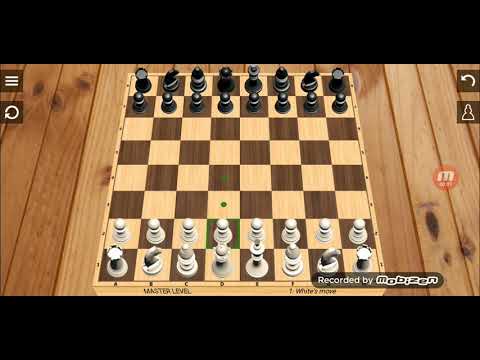
How Chess960 Positions Are Classified – A Practical Guide
Understanding the Basics of Chess960
Chess960, also known as Fischer Random Chess, reshuffles the back‑rank pieces while preserving the fundamental rules of standard chess. The primary goal of the variant is to emphasize creativity and reduce reliance on memorized opening theory. Because the pieces can start in 960 distinct arrangements, players often wonder how to talk about a particular setup without a long string of algebraic notation. A clear classification system helps coaches, tournament organizers, and software developers describe positions succinctly. Grasping these basics sets the stage for a more systematic approach.
In the United States, many clubs and online platforms use classification to sort games, generate puzzles, and match players with similar preparation needs. The system is not a marketing gimmick; it’s a practical tool that improves communication and analysis. Whether you are a casual player curious about a random position or a professional looking to prepare for a tournament, knowing how Chess960 positions are classified saves time and reduces confusion.
The Classification System: Symmetry, Castling, and Piece Distribution
The most widely accepted framework divides positions into three overlapping categories: symmetry of the back rank, castling rights, and the distribution of minor pieces. Symmetry refers to whether the left and right halves of the starting line mirror each other, which can affect opening ideas and tactical motifs. Castling rights are especially important because Chess960 retains the ability to castle, but the king and rook may start on unconventional squares.
Symmetrical vs. Asymmetrical Arrangements
Symmetrical positions have identical piece order on the a‑h and h‑a files, creating balanced pawn structures and similar development pathways for both sides. Asymmetrical setups often generate imbalanced games, where one side may have a natural development advantage. Recognizing symmetry helps players decide whether to pursue aggressive or positional strategies right from move one.
Castling Categories
Each Chess960 start can be assigned to one of three castling categories: short‑castle only, long‑castle only, or both castling options available. The classification depends on the relative positions of the king and the two rooks. Knowing the castling category is essential for engine analysis, as it influences move‑order decisions and end‑game safety.
Step‑by‑Step Method to Classify Any Starting Position
The classification process can be broken down into a simple checklist that works for humans and computers alike. Follow these steps to label a position accurately:
- Write down the piece order on the first rank from a‑file to h‑file (e.g., R N B Q K B N R).
- Identify the squares of the king and both rooks. Record the distance between the king and each rook.
- Determine castling rights:
- If the king is between the rooks, both short and long castling are possible.
- If the king is on the same side as a rook, only that side’s castling is legal.
- If the king is on an outermost square with a rook next to it, castling may be impossible.
- Check for symmetry by mirroring the piece order and comparing it to the original.
- Assign a classification label that combines symmetry (S or A) and castling (C‑short, C‑long, C‑both). For example, “S‑C‑both” means a symmetrical position with both castling options.
Applying this checklist consistently yields a compact code that can be used in databases, tournament software, and instructional material. The method is also scalable: you can automate it with a few lines of script in Python, JavaScript, or any language that can parse strings.
Common Classification Scenarios and Real‑World Examples
Below is a table that illustrates several frequently encountered Chess960 start positions, their piece order, and the resulting classification. The examples cover both symmetrical and asymmetrical arrangements, as well as the full range of castling possibilities.
| Position # | Back‑Rank Order (a‑h) | Symmetry | Castling Rights | Classification Code |
|---|---|---|---|---|
| 1 | R N B Q K B N R | Symmetrical | Both | S‑C‑both |
| 2 | N R B Q K B N R | Asymmetrical | Short only | A‑C‑short |
| 3 | B N R Q K B N R | Asymmetrical | Long only | A‑C‑long |
| 4 | R B N Q K N B R | Symmetrical | Both | S‑C‑both |
These examples demonstrate how the same set of pieces can yield very different strategic landscapes. Coaches often use the classification code to design lesson plans that focus on the unique tactical themes of each category.
Tools and Software That Automate Classification
Several modern chess platforms include built‑in utilities for identifying Chess960 classifications. When choosing a tool, consider the following features:
- Real‑time analysis: Immediate feedback on castling rights as you set up a position.
- Batch processing: Ability to import a list of positions and receive classification codes in CSV format.
- API access: For developers who want to integrate classification into custom dashboards or tournament software.
- Cross‑platform support: Works on Windows, macOS, Linux, and mobile devices.
Popular choices include ChessBase’s Fischer Random module, the open‑source chess960‑classifier Python package, and online services like Lichess that display castling options automatically. Many of these tools also link to Fischer сhess resources for deeper learning.
Benefits of Knowing the Classification for Players and Coaches
Understanding how Chess960 positions are classified offers tangible advantages across several dimensions of play. First, it streamlines preparation: a coach can assign homework that targets the specific castling constraints of a given class, saving hours of generic study. Second, it improves communication during live commentary, allowing analysts to reference a concise code rather than a lengthy piece list.
Third, the classification aids in tournament pairing algorithms, ensuring a balanced mix of symmetrical and asymmetrical games for fairness. Finally, players who internalize the categories develop a stronger intuition for early‑game plans, because they can anticipate typical pawn structures and piece activity associated with each class.
Limitations and Edge Cases You Should Watch Out For
While the classification system is robust, a few nuances can cause confusion. Positions where the king starts on the same square as a rook (an illegal arrangement in official rules) are sometimes generated by faulty randomizers; such cases must be filtered out before classification. Additionally, some rare setups produce ambiguous castling rights when the king and a rook are separated by only one empty square; different engines may interpret the legality differently.
Another edge case involves symmetrical piece order but asymmetric castling rights due to the king’s proximity to one rook. In these situations, the “symmetry” label still applies, but the castling category must be recorded carefully to avoid miscommunication. Awareness of these exceptions ensures that your classification remains accurate and trustworthy.
Frequently Asked Questions
Can I create my own classification code?
Yes. Many clubs adopt custom prefixes to indicate tournament round or player rating, but the core elements—symmetry and castling rights—remain universally understood.
Do all online Chess960 platforms follow the same classification?
Most major platforms adhere to the standard S/A and C‑short/C‑long/C‑both schema, but it’s wise to verify the implementation, especially on newer or niche services.
Is the classification useful for blitz or rapid games?
Absolutely. In fast time controls, a quick reference to the classification helps players decide whether to aim for a quick king safety plan or to launch an early attack.